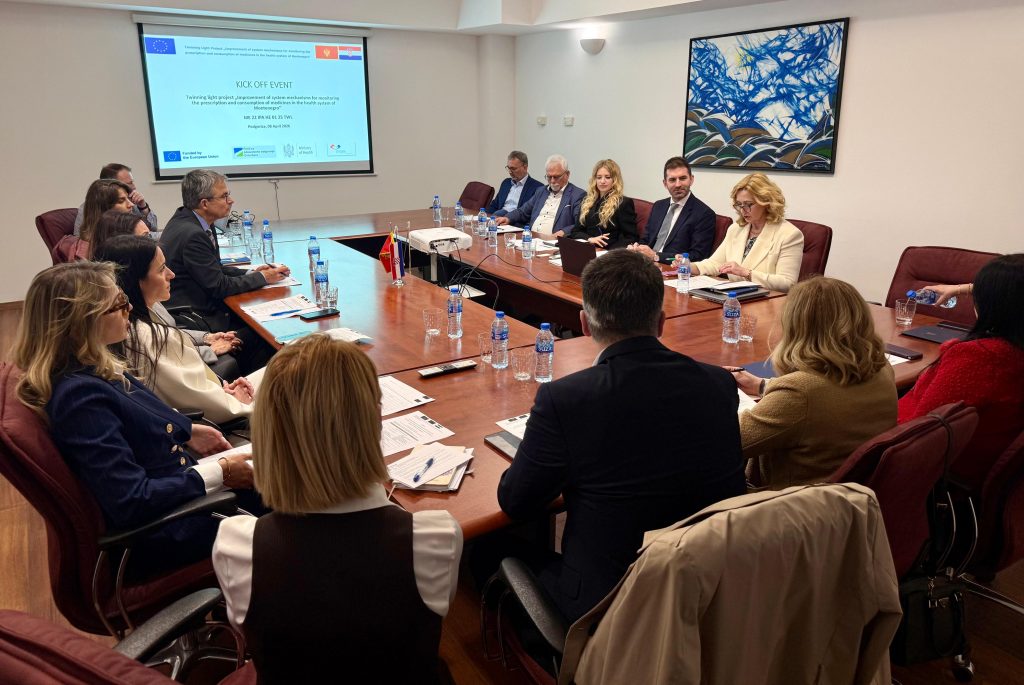

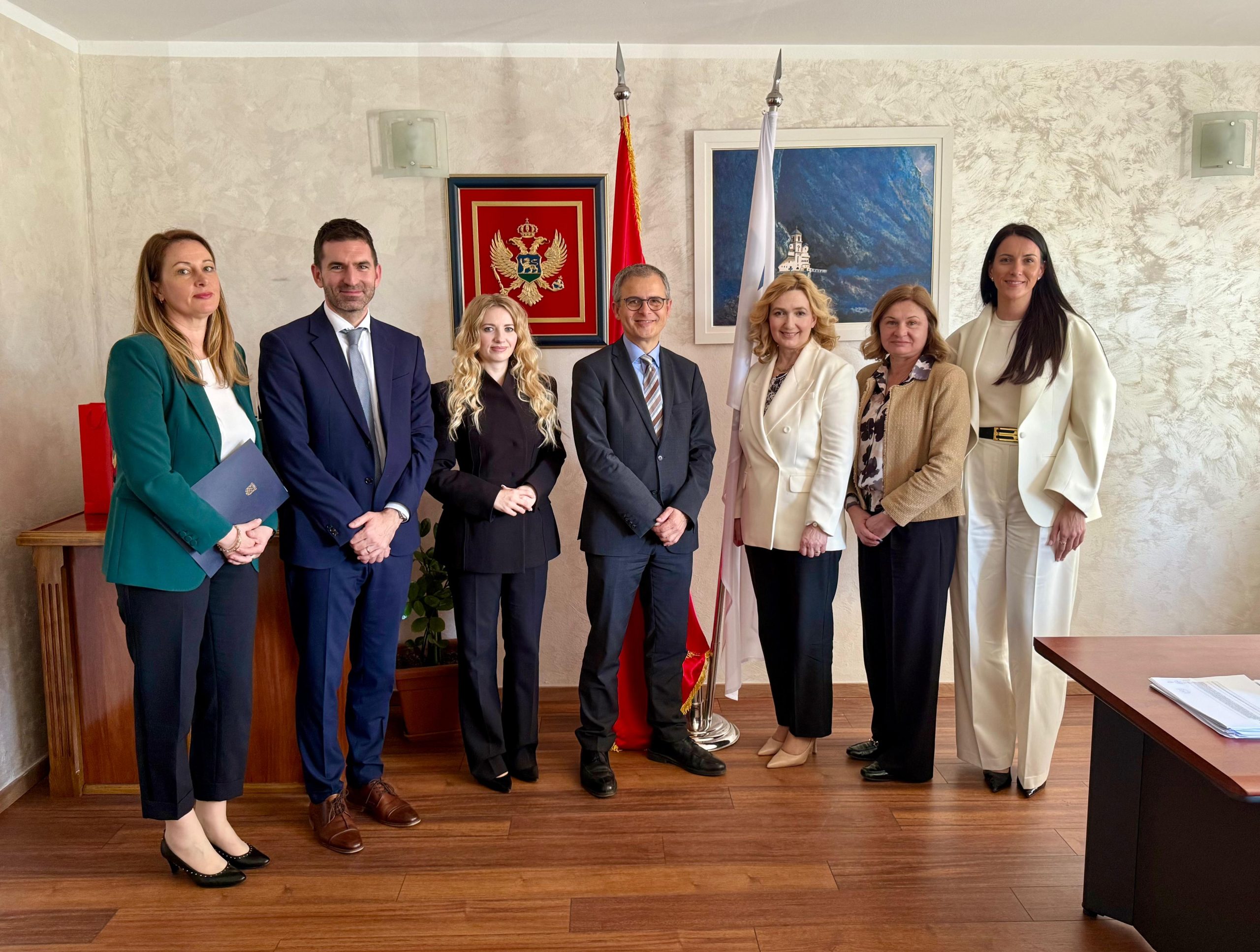
A new Twinning Light Project funded by the European Union has been launched in Podgorica to establish a sustainable and EU-aligned system for the rational prescribing of medicines in Montenegro’s public healthcare sector. It aims to strengthen monitoring mechanisms, improve institutional capacities, and enhance the efficiency and transparency of medicine use. The Twinning project will contribute to the development of evidence-based medical protocols and institutional capacity building, specifically related to the treatment of acute coronary syndrome (ACS), breast cancer, cervical cancer, colorectal carcinoma, and lung cancer.
This initiative represents an important step in Montenegro’s EU accession process, particularly under Chapter 1 – Free Movement of Goods and Chapter 28 – Consumer and Health Protection. By strengthening systems for the rational use of medicines, Montenegro aligns with EU standards in public health and the internal market for medicinal products.
At the kick-off meeting, Mr. Bernard Brunet, Head of Cooperation at the Delegation of the European Union to Montenegro, emphasized the benefits of learning from the experience of existing EU Member States. “Peer to peer exchanges strengthen mutual trust and help facilitate reforms related to the accession of Montenegro to the EU. Strengthening the administrative capacity of all public institutions is a key condition for Montenegro to fully benefit from EU integration. In particular in the health sector, the modernization of clinical protocols and better use of medicines will have a widespread impact on citizens”, said Brunet.
The State Secretary of the Ministry of Health emphasized the importance of the project for strengthening the healthcare system: “This project represents a significant step forward in improving the quality, efficiency, and sustainability of healthcare in Montenegro. By introducing more rational prescribing practices and strengthening monitoring mechanisms, we aim to ensure that medicines are used in a clinically appropriate and economically responsible way. This will ultimately contribute to better health outcomes for our citizens and a more resilient healthcare system aligned with European Union standards.”
Representatives of the Ministry of Health and the Health Insurance Fund highlighted the importance of partnership and the joint commitment of all involved parties. „Only through coordinated efforts, mutual trust, and dedication we can achieve sustainable results with long-term impact,” said Mrs. Ružica Milutinović Đurišić, the Project Leader Counterpart.
Ms. Ivana Portolan Pajić underlined that the project is grounded in practical cooperation and shared experience, noting that Twinning is about working together through knowledge exchange and solutions tailored to the national context. She highlighted that Croatia brings valuable experience from its own EU accession process, offering practical and proven approaches that can be adapted to Montenegro’s healthcare system. She also emphasized that the ultimate goal is not only to deliver formal outputs, but to achieve tangible improvements in the quality, efficiency, and transparency of the healthcare system.
The project’s key objectives include improving the existing national policy on medicines and the quality of healthcare, strengthening the institutional capacities of healthcare professionals, and developing effective control mechanisms to ensure the rational use of medicines. Special emphasis is placed on building the capacities of staff at the Primary Healthcare Centre of the Capital, the Clinical Centre of Montenegro, and officials of the Health Insurance Fund of Montenegro (HIFM) in tracking, managing, and controlling the use of pharmaceuticals.
In addition, the project will support the development of proposals for appropriate control mechanisms aimed at rationalizing medicine consumption and enabling continuous monitoring of pharmaceutical stocks across public healthcare institutions.
Expert support and knowledge transfer will be provided by experts from the Republic of Croatia (Ministry of Health, University Hospital “Sestre milosrdnice”, University Hospital Zagreb and Croatian Institute for Public Health) ensuring the application of best practices and alignment with European Union standards in the field of pharmaceutical policy and healthcare management.